Guide
Virtual reality in Paris: which experience should you choose?
Updated · 5 min read

Not all headset experiences are alike. Far from it.
Contents
1. What virtual reality is
A headset, two screens, a motion sensor. The image is recalculated every time you turn your head, which is enough to convince the brain it is looking at a place and not a video. Add spatialised sound, where noises come from a precise point — behind you, to your left — and the illusion holds.
That is all. Virtual reality addresses the eyes and the ears, and nothing else.
What changes completely from one experience to the next is what you decide to do with it.
2. The three families of VR experience
Three different crafts hide behind the same word, with different audiences.
Standard VR venues
You are in a booth of a few square metres, controllers in hand, playing without leaving your zone. Movement happens by teleportation or joystick.
It is the most widespread format, and often the cheapest. It makes a decent first encounter with a headset: in ten minutes you understand what the technology can do.
Its limits are the limits of the booth. There is no set around you, nothing to touch, and the experience feels much the same from one venue to the next. Experiences of this type: Virtual Room, Sparkling VR, The Edge VR, VirtualTime, Virtual Center.
Cultural VR experiences
No game here. You are taken to visit the Notre-Dame of the 13th century, an Egyptian necropolis, a vanished city. Some are walked through on foot, in a group, in rooms set up inside museums or heritage sites.
The reconstruction work is sometimes remarkable and the emotion is real. But you remain a spectator: you look, you listen to a commentary, you move along. You do not act, and you decide nothing.
Experiences of this type: Excurio, Sandora VR, Eclipso, Emissive, Timescope.
Free-roam experiences
You walk freely through a large space, untethered, with several players. It is the most immersive of the three formats, and the closest to KIRA.
It has one flaw, and it is fairly visible once you look at the catalogues: it is almost always shooting. Zero Latency offers nine experiences, seven of them built around shooting. EVA offers three arena experiences, two of them FPS. Zombies recur across a large part of the offer.
That orientation has a direct consequence for the audience. More than 70% of players are men, and more than half are between 25 and 34. By comparison, escape rooms attract 55% women, with a far broader age range.
Free roam has therefore succeeded technically, but has locked itself into one genre, and one audience.
Experiences of this type: Zero Latency, EVA, The Gate VR, Seven Squares.
3. What sets KIRA apart
VR is a means, not an end
In the three families above, virtual reality is the product. You come to "do VR".
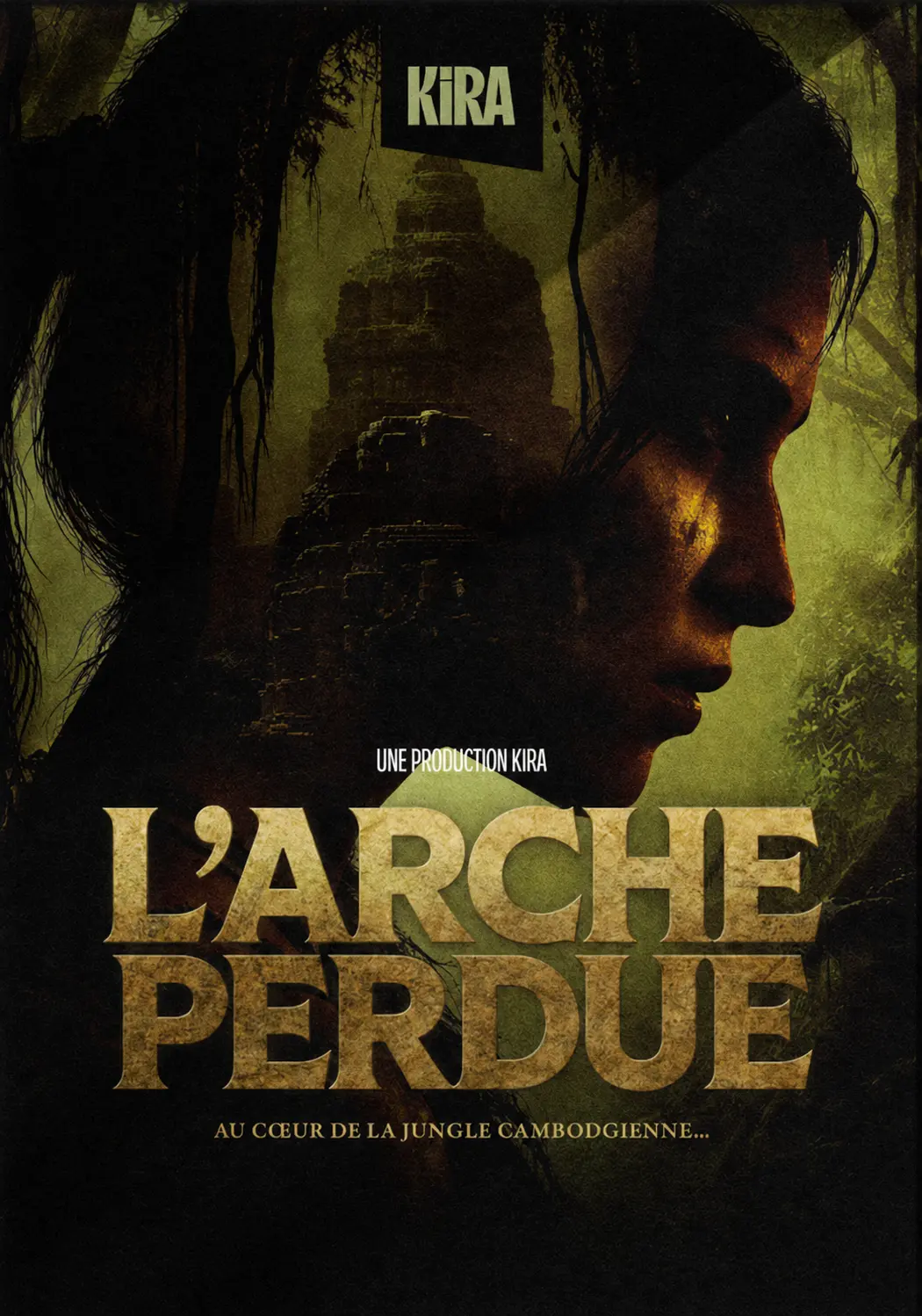
At KIRA it serves one purpose: making a jungle, a temple and a volcano appear inside 180 m² of the 11th arrondissement. Once it has done that, it disappears. The rest happens in the real world: the sets you touch, the objects you handle, the wind, the heat, the shaking floor, and the people you are with.
Nobody walks out saying "I did some VR". They say what they lived.
No controllers, so no barrier
A controller means two or three minutes of explanation, then a quarter of an hour of fumbling, and part of the group checking out. It is the most common reason someone refuses to come: the fear of not knowing how.
At KIRA there is none. Your hands are tracked directly, and everything else runs through real objects: a steering wheel, a torch, a crank. There is nothing to learn, so nothing to get wrong.
That is also what opens the experience to an entirely different audience from current free roam: parents as much as teenagers, people who have never touched a console, mixed groups where nobody wants to feel stupid.
It does not stop at VR
That is the subject of hyper-reality: four stacked layers — physical sets, virtual reality, connected props, 4D effects — instead of just one.
It takes the escape room without its two flaws
Escape rooms built an enormous market on a sound intuition: putting a group of friends inside a set, together, searching and thinking. They run into two things.
Immersion stops at the walls. A plywood set stays a plywood set, and no escape room can take you to the bottom of a volcano.
The sets are frozen. Building a new room is expensive and takes months. Renewal is slow, so people do not come back often.
KIRA keeps what works — the searching, the puzzles, handling objects, cooperation — and moves most of the set into the virtual world. What stays physical is simple and fast to rebuild. That is what allows a new adventure every three to six months where an escape room takes years.
At the crossroads of cinema, video games and escape rooms
Cinema knows how to establish a world, but you stay seated. Video games make you an actor, but it all fits in a screen. Escape rooms put you physically inside the set, but cannot take you very far.
KIRA takes what each does best: the staging of the first, the pace and action of the second, the cooperation and searching of the third.
4. Where it happens
KIRA Paris
19 rue de la Pierre Levée, 75011 Paris
1 hour sessions · opening soon
5. Frequently asked questions
What is the difference between standard VR and free roam?
In standard VR you stay inside a zone of a few square metres and move using a controller. In free roam **you genuinely walk** through a large space, untethered, with other players.
Do I need to be a gamer to come to KIRA?
No, and that is a deliberate choice. There are **no controllers and no commands to learn**: you walk and you use your hands.
Does it make you feel sick?
VR motion sickness comes from joystick-driven movement, when the eye sees a motion the body does not feel. *At KIRA there is no artificial movement at all.*
How many players at once?
**2 to 6** per team.
What is the minimum age?
**11 years old.**
Can you play wearing glasses?
Yes, the headset is worn over prescription glasses.
Where is KIRA?
At **19 rue de la Pierre Levée, Paris 11e**.